
The reshaping of global trade lanes in 2026 is no longer theoretical. With negotiations between the European Union and India reaching a decisive phase, and the India–US Bilateral Trade Pact confirmed in February 2026, logistics and freight forwarding are entering a period of accelerated change. For forwarders, carriers, and supply chain stakeholders, these agreements are not just political milestones – they are structural shifts that will redefine volumes, routes, compliance expectations, and competitive advantage.
We explore how the India–EU Trade and Investment Agreement and the India–US Bilateral Trade Pact are set to impact logistics and freight forwarding, and why participation in a global logistics network such as 4NEXT Global is becoming a strategic necessity rather than just a nice-to-have.
Global context: why India is now central to global supply chains
India has spent the last decade positioning itself as a credible alternative and complement to China in global manufacturing and sourcing strategies. With sustained GDP growth, heavy infrastructure investment, port modernisation, and production-linked incentive (PLI) schemes, India is now firmly embedded in nearshoring and “China+1” strategies across both Western and Asian markets.
What has been missing until now has been the legal and commercial scaffolding to fully unlock trade flows at scale with major partners such as the European Union and the United States. The 2026 trade agreements aim to address exactly that gap.
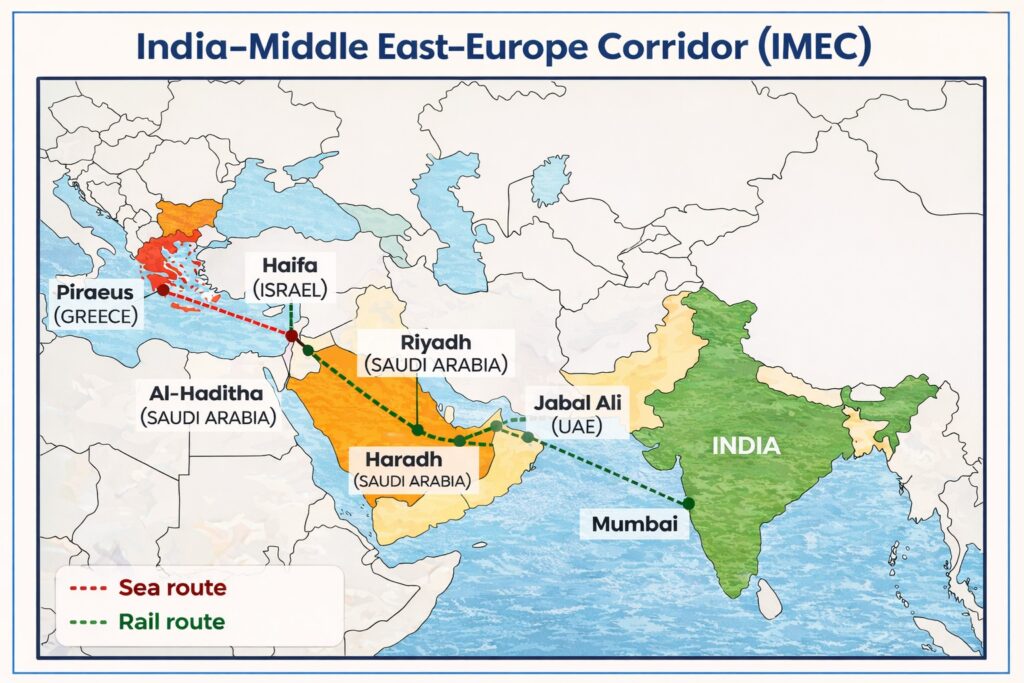
The India–EU Trade and Investment Agreement: implications for logistics
The India–EU Trade and Investment Agreement is expected to be one of the most comprehensive FTAs India has ever signed. Beyond tariff reductions, it focuses heavily on regulatory alignment, services liberalisation, digital trade, sustainability, and investment protection.
From a logistics and freight forwarding perspective, several impacts stand out.
First, tariff liberalisation will significantly increase bilateral trade volumes. Reduced or eliminated duties on automotive components, pharmaceuticals, textiles, machinery, chemicals, and electronics will stimulate both exports from India to Europe and imports into India. For freight forwarders, this means sustained growth in containerised sea freight, air cargo for high-value goods, and project cargo linked to manufacturing expansion.
Second, customs simplification and regulatory alignment will reduce friction at borders. The agreement is expected to introduce streamlined customs procedures, greater use of digital documentation, and improved transparency in inspections. This directly benefits forwarders that can offer compliant, tech-enabled customs brokerage across multiple EU member states and Indian gateways.
Third, sustainability requirements will reshape routing and carrier selection. The EU’s environmental regulations, including carbon reporting and emissions-related disclosures, will increasingly apply to Indian exporters serving Europe. Logistics providers will need to offer greener transport options, optimised routing, and reliable emissions data. Networks that share best practice and approved partners across regions will have a clear advantage.
Fourth, services liberalisation will open doors for European and Indian logistics firms to operate more freely in each other’s markets. This increases competition, but also partnership potential. Forwarders with trusted partners on both sides will be able to scale faster without the risks of setting up standalone operations.
The India–US Bilateral Trade Pact (February 2026): a Different but Equally Powerful Catalyst
While the India–EU agreement is broad and regulatory-heavy, the India–US Bilateral Trade Pact signed in February 2026 is more commercially focused and speed-oriented.
The US–India pact places strong emphasis on market access, supply chain security, and strategic industries. Key beneficiaries include technology hardware, semiconductors, pharmaceuticals, defence-related manufacturing, agriculture, and energy equipment.
For logistics and freight forwarding, the impacts will be immediate.
Air freight volumes between India and the US are expected to rise sharply, particularly for electronics, medical supplies, and time-critical manufacturing inputs. Forwarders with strong India–US air cargo partnerships, capacity agreements, and consolidation capabilities will be in high demand.
Ocean freight will also see growth, particularly on East Coast and Gulf routes, driven by diversified sourcing away from East Asia. US importers are increasingly favouring Indian suppliers to reduce geopolitical risk, and logistics providers must adapt routing strategies accordingly.
Another critical aspect is supply chain resilience. The pact prioritises secure, transparent supply chains, which means greater scrutiny of origin, handling, and compliance. Freight forwarders that can demonstrate end-to-end visibility and robust partner networks will be preferred over transactional providers.
Warehousing, fulfilment, and multimodal logistics in India are also set to expand rapidly as US companies invest in Indian manufacturing and export hubs. This creates opportunities for international forwarders to collaborate with local specialists rather than attempting to build capabilities from scratch.
Combined Impact: a Surge in Complexity, Opportunity and Competition
Taken together, the India–EU and India–US agreements will dramatically increase India’s trade throughput with two of the world’s largest economic blocs. More cargo, more lanes, more regulations, and more competition will follow.
For logistics providers, the challenge is not whether opportunity exists but whether they are positioned to capture it efficiently and profitably.
Smaller and mid-sized freight forwarders in particular will face a dilemma. The scale of these trade corridors demands local expertise, regulatory knowledge, and trusted operational partners in multiple countries simultaneously. Attempting to manage this through ad-hoc agents or one-off relationships introduces risk, inconsistency, and reputational exposure.
This is where global logistics networks become critical.
Why Global Logistics Networks Matter More Than Ever
A global logistics network is no longer just a membership badge. In the context of major trade agreements, it becomes an operational and commercial multiplier.
Networks like 4NEXT Global provide structured access to vetted, like-minded freight forwarders across key trade lanes. This is particularly valuable when entering or scaling within complex markets such as India, the EU, and the US simultaneously.
One of the most immediate benefits is trusted market entry. When new trade lanes open or expand rapidly, speed matters. Having pre-qualified partners in ports, airports, and inland hubs allows forwarders to respond to client demand without months of due diligence.
Consistency of service is another major advantage. As trade volumes grow, shippers expect uniform standards, communication, and problem-solving across borders. A network aligned around shared values and service expectations reduces friction and protects brand reputation.
Knowledge sharing is also increasingly important. Trade agreements evolve, and regulatory interpretation differs by country. Being part of a network enables members to share real-world insights on customs changes, compliance pitfalls, carrier performance, and market trends long before they appear in formal guidance.
Commercial collaboration should not be underestimated either. Networks create reciprocal business opportunities, co-loading arrangements, and joint solutions for multinational clients. In high-growth corridors like India–EU and India–US, this collaboration can be the difference between winning and losing key accounts.

How Forwarders can Practically Benefit from the New Trade Landscape
To capitalise on these agreements, logistics companies should take several strategic steps.
1) Review and realign trade lane priorities – India should no longer be treated as a secondary or “emerging” market. Dedicated India-focused strategies for Europe and the US are now essential.
2) Strengthen compliance and digital capabilities – Faster customs processes do not mean looser scrutiny. Forwarders must invest in documentation accuracy, visibility tools, and partner alignment.
3) Prioritise partnerships over expansion for expansion’s sake – Establishing owned offices in every market is rarely efficient. Strategic alliances within a trusted global network offer scalability without excessive risk.
4) increase visibility within the global logistics community – As shippers reassess suppliers and routes, being active in a recognised global network improves credibility, referral flow, and deal access.
Looking Ahead
The India–EU Trade and Investment Agreement and the India–US Bilateral Trade Pact mark a turning point in global trade. They will accelerate India’s integration into Western supply chains and reshape how goods move between continents.
For logistics and freight forwarding companies, the opportunity is substantial – but so is the complexity. Those that operate in isolation will struggle to keep pace. Those embedded in strong global logistics networks will be better positioned to adapt, collaborate, and grow.
In a world where trade is becoming both more connected and more regulated, success belongs to the well-networked.
Join 4NEXT Global
If you’re looking to expand your international footprint, build stronger partnerships within high-growth trade regions, and be part of a global logistics community that values connection, collaboration, and real commercial outcomes, we invite you to explore membership with 4NEXT Global.
Join us as we continue to grow our network, support our members, and create new opportunities across India, EU, US and global trade lanes in 2026 and beyond.
You can contact us today to join or learn more about member benefits by emailing us at info@4nextglobal.com or calling on +905323691686.